In most trades a lead goes cold over days. This one goes cold over a coffee. The homeowner is standing in water, the same inquiry has usually been sold to two or three other companies at the same moment, and they are working down a list until somebody picks up. A lead you return in forty minutes is often a job that started thirty minutes ago.
Water damage leads are inquiries from homeowners or property managers with active water intrusion: a burst pipe, a failed water heater, an appliance leak, sewage backup or storm flooding. They come from search, from referrals, or from marketplaces that sell the same call to several restoration companies at once. What makes them different from leads in other trades is how quickly they expire.
Identical inquiry, identical price. The only variable is how long it sat.
| Time to first contact | What the homeowner is doing | Where you stand |
|---|---|---|
| Under five minutes | Still on the phone, still calling down the list. | First voice they hear. Usually the job, and often before the competition has dialed. |
| Fifteen minutes | Has spoken to somebody. May not have committed. | Still live, but you are now the second opinion rather than the rescue. |
| An hour | Someone has given an arrival time. Water is still spreading. | Rarely recoverable. They have a plan and you are interrupting it. |
| Next morning | A truck is outside. Extraction has started. | The job is gone and you paid full price for the lead. |
| What changed | Nothing about the lead itself. | Only who answered first. |
Every other trade in this library has leads that tolerate a delay. A roofing inquiry survives until the weekend, a remodeling inquiry survives until spring. This one does not survive lunch, and the price is the same whichever row you land in. That is the entire economics of buying water damage leads, and it is a staffing question rather than a marketing one.
From our own work
We run the answering side of this for clients, and the table above is not theoretical. On one account an inquiry landed at 6:40 on a weekday evening. A text went out the same minute, an email a minute later, a message at 6:56, and the customer replied at 6:57pm with their specification. Nobody was at a desk. The owner picked the conversation up at 7:02.
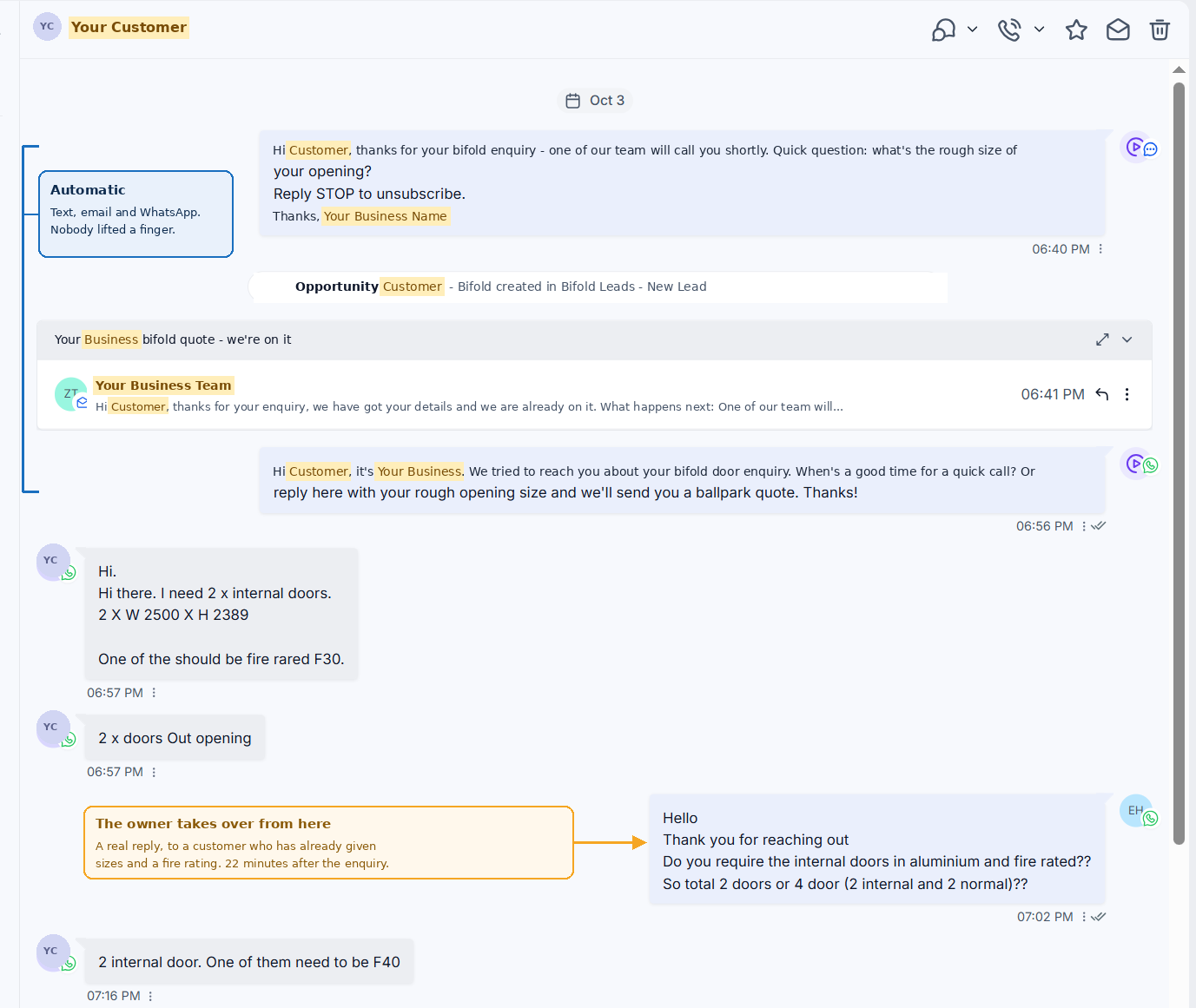
Open full sizeThat was a home improvement contractor in another country, and a quoted job rather than an active emergency, so treat it as the mechanism rather than a benchmark for restoration. What transfers is the only thing this page argues: the response did not depend on anybody being awake. In a trade where the lead expires in minutes, that is the difference between the first row of the table and the fourth. The full breakdown is published, caveats included.
If nobody is reaching the phone inside five minutes at 11pm, buying shared leads is buying losses at full price. Sort the answering first and the lead spend second. Doing it the other way round is the most common and most expensive mistake in this trade.
Shared leads are cheaper per lead and the win rate depends almost entirely on your response time. Exclusive costs more and removes the race. Which is better depends on something you control, so measure your own answer time honestly before choosing.
Is there water in the property right now. That single answer separates an emergency from a homeowner researching mold remediation for next month, and it decides whether somebody drives tonight. The rest can wait until you are on site.
A fifty dollar lead you lost to response time costs more than a two hundred dollar lead you won. In a trade where the same lead sells to several companies, cost per lead is close to a meaningless number.
And the leads that never go through this race at all are the referred ones, which is the argument in restoration marketing.
They work, and they are the most costly route to a job in this trade. You are paying for a lead the marketplace also sold to your competitors, racing them on response, and winning a customer who has no particular reason to call you next time rather than search again.
Which is fine as a supplement and dangerous as a foundation. A company whose entire volume comes from purchased leads has no asset at the end of five years - the marketplace owns the relationship, the pricing and the tap, and any of the three can change without notice.
The leads that cost nothing are the ones that come from a plumber who trusts you, an adjuster who has seen your documentation, or a past customer whose neighbor has just had the same thing happen. Those take longer to build and they do not arrive with a race attached.
The Growth Score checks all five engines against your business and estimates what each gap is worth per month, starting with what happens to an emergency call outside office hours. Free, and yours whether we work together or not.
Get My Complimentary Growth Score →Related: Answering and follow-up